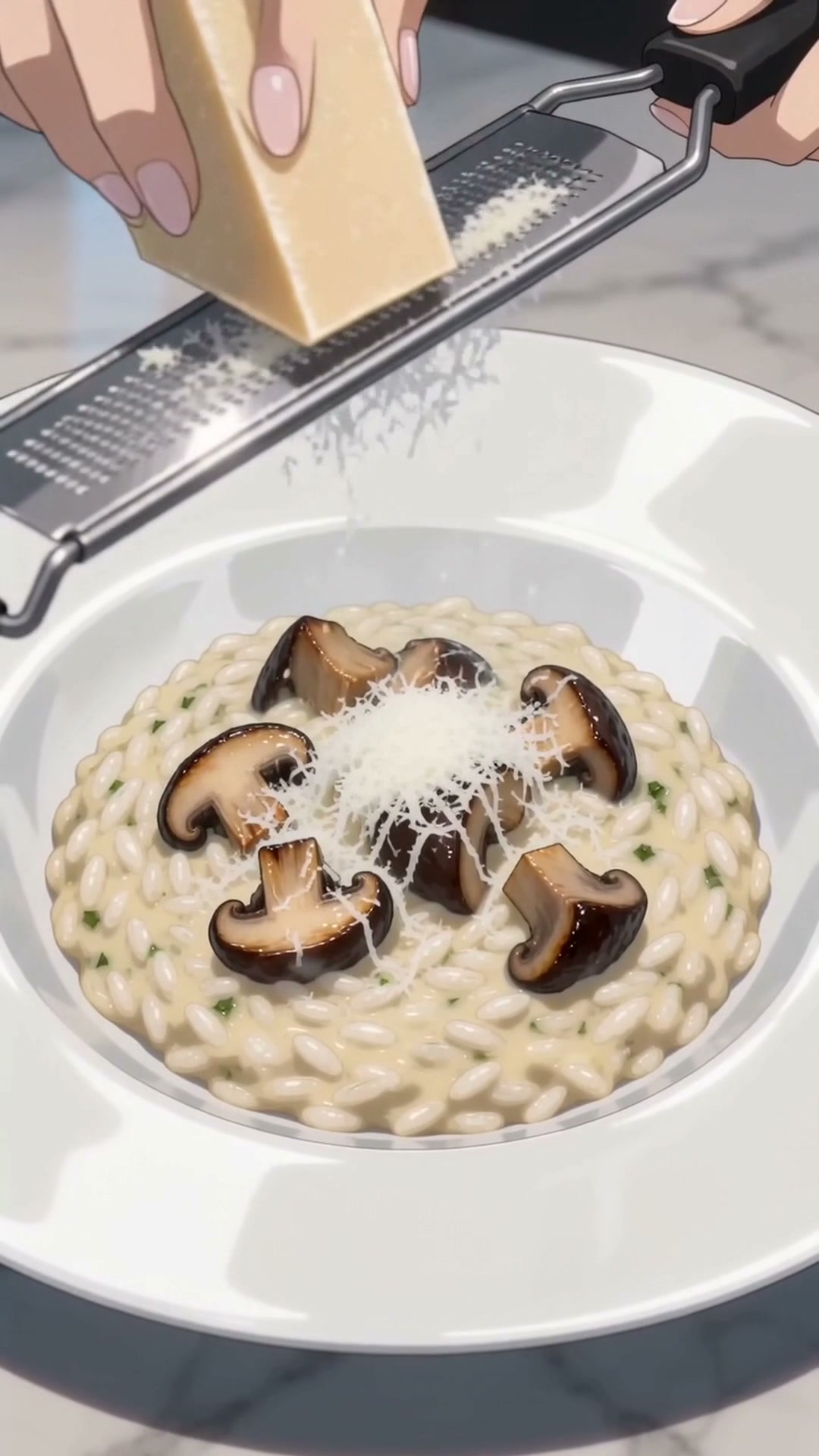
creamy mushroom risotto, and the spoon test that proves it
Ingredients · tap to check
- 1 cup (200 g) arborio or carnaroli rice
- 250 g (9 oz) cremini mushrooms, sliced about 3 mm thick
- 1 small shallot or 1/2 small onion, finely diced
- 1/2 cup dry white wine
- 4-5 cups chicken or vegetable stock, kept hot in a separate pot
- 4 Tbsp unsalted butter, divided (2 for the toast, 2 kept cold for the finish)
- 3/4 cup finely grated parmigiano-reggiano, plus more to finish
- 1 Tbsp olive oil
- salt and freshly cracked black pepper
- 1 Tbsp chopped parsley
The Way
- Get the stock hot first and keep it at a bare simmer in a separate pot the whole time. Cold stock hitting the pan shocks the grain and stalls the starch — this is the step people skip and then wonder why it never turns creamy.
- Sear the mushrooms separately, before the rice. Slice them about 3 mm thick, get a wide pan hot with a little butter and oil, and lay them in a single layer. They will dump their water and look pale and damp — leave them alone. Once the pan dries out they catch and turn golden-brown, then deep umber. Set them aside; they go back in whole at the end.
- Tostatura. In the same pan melt 2 Tbsp butter, soften the shallot until translucent, then add the dry rice and stir. Toast until the edges of each grain go glassy and translucent while the center stays an opaque pearl. That seal is what keeps the grains separate instead of collapsing into porridge — about 2-3 minutes.
- Deglaze with the white wine. It should hiss hard and go mirror-bright, then reduce until only a thin glazed film is left and the alcohol bubbles have collapsed. Don't move on while there's still a puddle.
- Add the hot stock one ladle at a time, stirring gently and steadily. Wait until each ladle is nearly absorbed before the next one — the surface goes from glassy wet back to soft matte, and that's your cue. Keep going about 18 minutes, until the grains are tender with the faintest bite left.
- Fold the seared mushrooms back in near the end, gently, so they stay whole pieces rather than dissolving into the sauce.
- Mantecatura — take the pan OFF the heat completely. Add the cold butter and the grated parmesan and shake and beat the pan rather than stirring it. The surface flips from dull to a deep satin gloss in about thirty seconds. Off the heat is the whole point; on direct heat the fat breaks into an oily film instead of emulsifying.
- The all'onda test. Tip the pan and let the risotto slide onto a warm plate — it should spread in one slow loose wave and settle level, never pooling thin and never mounding stiff. Drag a spoon through it: the furrow should hold for a second, then close back over slowly. That's done.
- Grate over more parmesan, add cracked pepper and parsley, and eat it immediately while it still moves.
midnight tip. risotto is a texture, not a recipe — all'onda means 'on the wave', and the spoon test is the only doneness check that matters. drag a spoon through and watch the furrow close back over slowly. if it snaps shut like water it needs another few minutes, and if it stays open in a stiff trench it has gone too far (a splash of hot stock and a hard shake usually brings it back). the two things that actually decide the outcome are keeping the stock hot and taking the pan off the heat before the butter and cheese go in.
Questions
arborio or carnaroli?
either works. carnaroli holds its bite a little longer and is more forgiving if you get distracted, arborio releases starch faster and turns creamy sooner. what you can't swap in is a long-grain rice — the creaminess comes from the surface starch on these short round grains, not from any cream.
why did mine turn out gluey and stiff?
usually one of three things: the toasting step got skipped so the grains had no seal, the stock went in cold, or it sat too long after finishing. risotto keeps tightening off the heat, so it's meant to be plated and eaten the moment it passes the spoon test. a splash of hot stock and a hard shake will loosen it back up.
do I really have to stir the whole time?
gently and steadily, not frantically. the stirring is what rubs the starch off the grains into the liquid, which is where the creaminess comes from. but constant violent stirring breaks the grains apart — you want a calm, regular motion, and then no stirring at all during the final butter-and-cheese step, which is shaken instead.
why sear the mushrooms separately?
if you cook them in with the rice they steam in the stock, stay pale and go rubbery, then dissolve into the sauce. seared alone in a dry hot pan they brown properly and stay whole umber pieces you can still see on the plate.
(this one was RISOTTO) — it finds your DMs.
More midnight meals




















the prompt format behind them →
@jens_midnightkitchen