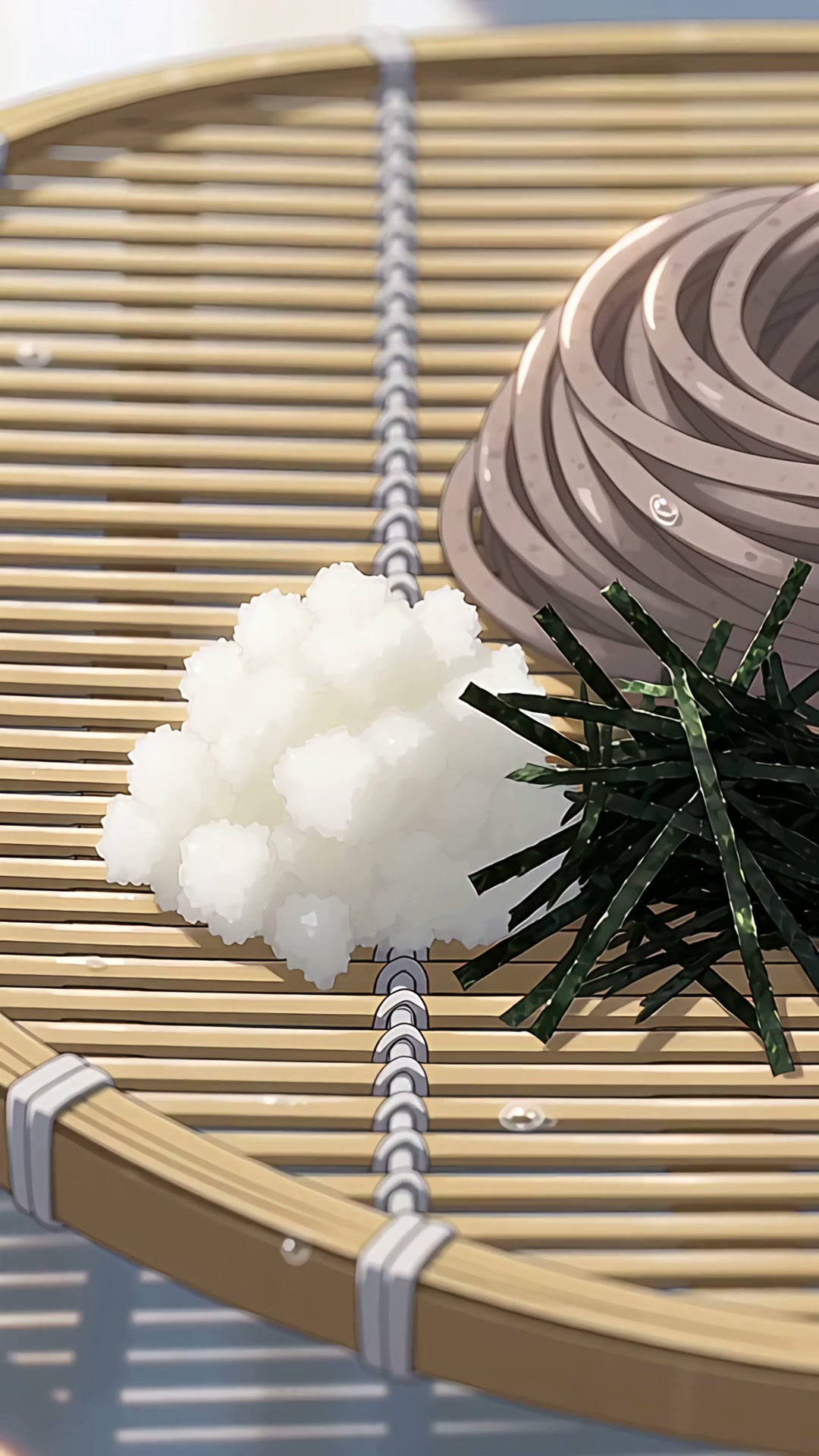
ice-water shocked soba, only the tips dipped
Ingredients · tap to check
- 200 g (7 oz) dried soba noodles
- 1/4 cup sake
- 1/2 cup mirin
- 1/2 cup soy sauce
- 1 piece kombu, about 1 x 1 inch
- 1/2 to 1 cup katsuobushi (bonito flakes), loosely packed
- 1 1/8 cups ice water, for diluting
- 2 scallions, thinly sliced
- wasabi, freshly grated or from a tube
- shredded nori (kizami nori)
- grated daikon, optional
- plenty of ice
The Way
- Make the mentsuyu concentrate first so it has time to chill. Put the sake, mirin, soy sauce and kombu in a small pot and bring it to just under a boil - do not let it roll.
- Add the katsuobushi, drop the heat and let it steep 5 to 10 minutes. Strain out the solids and chill the liquid hard, in the fridge or over an ice bath. The concentrate keeps a month refrigerated, so it is worth making a double batch.
- Bring a large pot of water to a rolling boil - no salt, unlike pasta. Fan the soba out as you drop it in so the strands do not clump, stir once, and boil 4 to 5 minutes until just barely toothsome. Overcooked soba turns to mush and cannot be rescued.
- Drain into a colander and rinse under cold running water, rubbing the strands gently between your hands. This washes off the surface starch and is the whole reason good soba does not stick to itself. Do not skip it.
- Move the rinsed noodles into a bowl of ice water for about 30 seconds. This stops the cooking and tightens the strands so they go firm and silky. Drain thoroughly - waterlogged noodles will dilute your sauce.
- Dilute the concentrate: 6 Tbsp mentsuyu to 1 1/8 cups ice water, roughly 1 to 3. Taste and adjust - it should read salty on its own, because you are only dipping. Pour into small individual bowls and add an ice cube or two.
- Pile the drained noodles on a bamboo zaru or a flat plate so they drain rather than sit in a puddle. Serve the scallion, wasabi, nori and daikon on the side, not stirred in.
- Eat the traditional way: pick up a small bundle, dip only the ends into the tsuyu, and slurp. Never pour the sauce over the noodles - the point is that each mouthful is a different ratio.
midnight tip. the cold rinse and the ice bath are two separate steps and people collapse them into one. the rinse is mechanical - you are physically rubbing the starch film off. the ice bath is thermal - it firms the strands. do only the rinse and the noodles stay slack; do only the ice bath and they stay slippery and glue together in the bowl. thirty seconds each and it costs you nothing.
Questions
what percentage buckwheat should I buy?
anything from 40% up eats well. higher buckwheat means a darker, more fragrant, more fragile noodle - 100% juwari soba tastes best but breaks easily and needs a gentler hand in the colander. an 80/20 is the easy everyday choice.
can I skip making the mentsuyu?
bottled concentrate is fine and it is what most Japanese households actually use on a weeknight. just check the label for the dilution ratio, because bottled strengths vary a lot - some want 1 to 3, some 1 to 5.
why is my soba gluey?
you skipped the cold rinse, or you drained and let it sit. buckwheat sheds a lot of starch and that film sets like glue as it cools. rinse under running water while rubbing the strands, then ice bath, then drain well.
can I make it ahead?
the tsuyu yes, the noodles no. boiled soba goes soft and starts sticking within about half an hour even chilled. boil it right before you eat - it only takes five minutes, which is the reason this is a summer dish in the first place.
(this one was SOBA) — it finds your DMs.
More midnight meals



















the prompt format behind them →
@jens_midnightkitchen