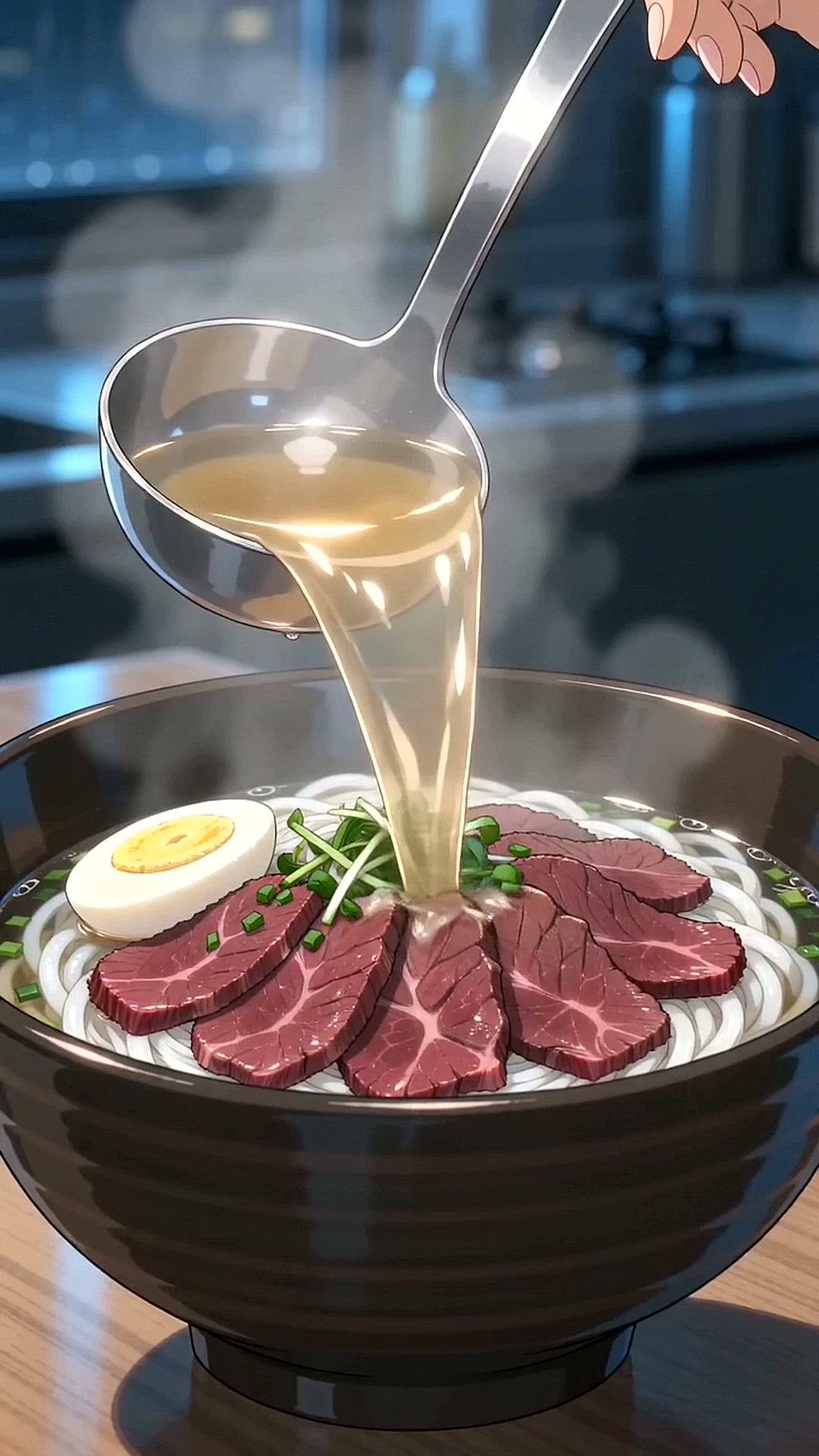
beef pho with charred onion and toasted spice broth
Ingredients · tap to check
- 1.5 kg (3 lb) beef leg or knuckle bones
- 500 g (1 lb) beef brisket, in one piece
- 1 large yellow onion, left whole and unpeeled
- 60 g (1 thumb) ginger, sliced into thick coins
- 4 whole star anise
- 1 cinnamon stick
- 6 whole cloves
- 1 tsp black peppercorns
- 3 L (12 cups) cold water, plus more for blanching
- 3 Tbsp fish sauce, plus more to taste
- 1 Tbsp rock sugar or brown sugar
- 2 tsp salt
- 200 g (7 oz) dried banh pho flat rice noodles
- 300 g (10 oz) beef eye of round or sirloin, in one block, well chilled
- 2 scallions, sliced thin
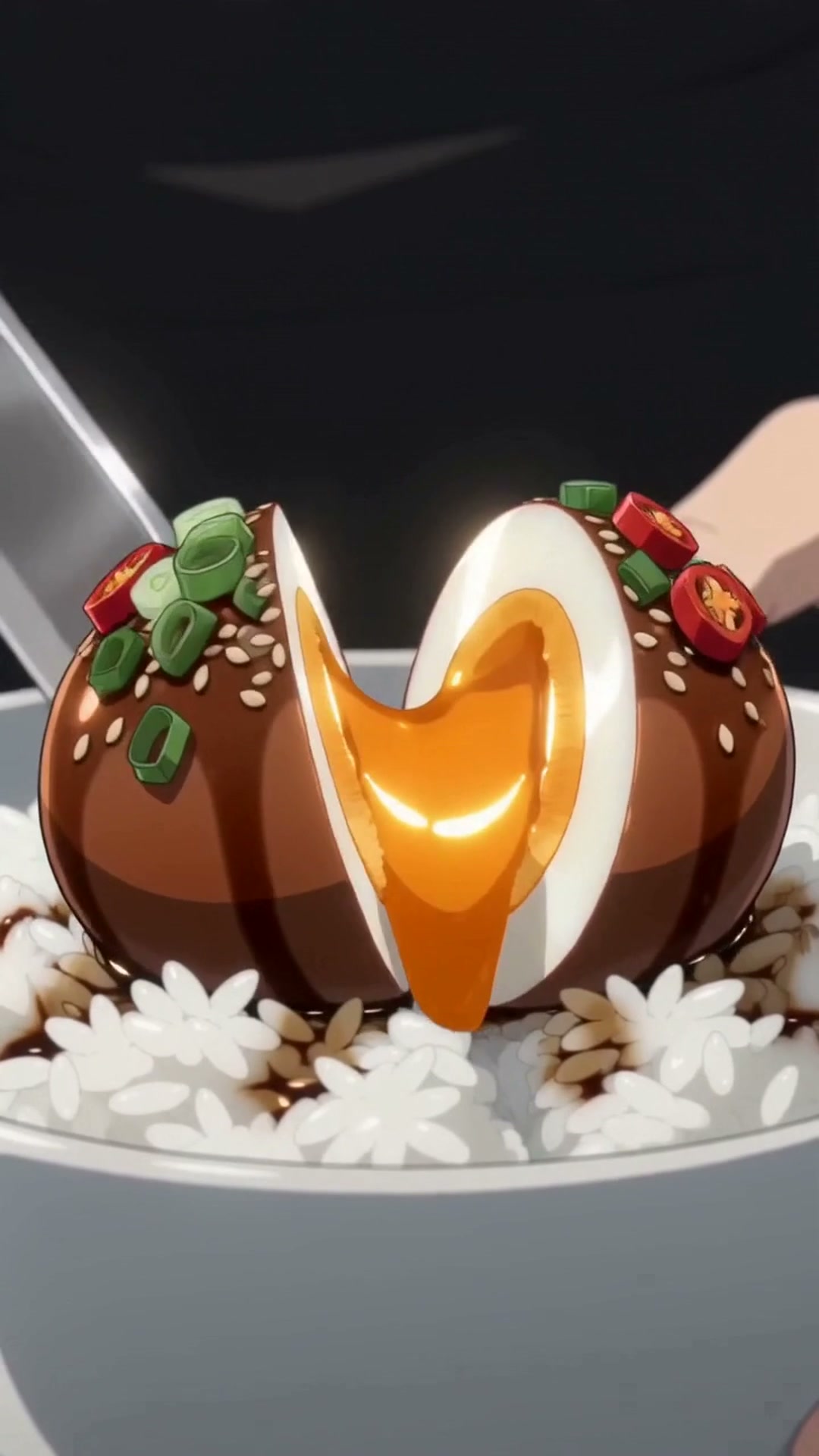
- 1 boiled egg, halved
- chili oil, to finish
- for the table: bean sprouts, cilantro, thai basil, lime wedges
- fresh rice-paper spring rolls, store-bought, to serve alongside
The Way
- Set the whole unpeeled onion straight onto a gas burner over a medium flame and leave it there until the skin blisters and goes properly black, about 3 minutes, then turn it and blacken the other side. Do not oil it and do not rinse the char off afterwards. Dry heat on bare flame is what gives this broth its smoky depth, and nothing else in the recipe replaces it.
- Put the star anise, cinnamon, cloves and peppercorns in a dry pan over medium heat and shake them until they skitter and turn fragrant, 1 to 2 minutes. Take them off the moment you can smell them across the kitchen - past that they turn bitter.
- Cover the bones with cold water in a large pot, bring to a hard boil for 10 minutes, then drain and rinse both the bones and the pot. This step is the difference between clear broth and grey broth, so do not shortcut it.
- Return the bones to the clean pot with the brisket, the 3 L cold water, the charred onion, the ginger coins and the toasted spices. Bring it up slowly to a bare simmer, never a rolling boil.
- Skim the grey foam off the surface with a shallow ladle for the first 20 minutes, going back every few minutes until the surface runs clean. A hard boil emulsifies the fat and clouds everything, so keep it at the lazy-bubble stage the whole time.
- Simmer 3 hours uncovered, lifting the brisket out at the 90 minute mark so it does not fall apart. Strain the broth through a fine sieve, then season with the fish sauce, rock sugar and salt, tasting until it goes clear and round rather than salty. You want about 1.5 L of finished broth.
- Freeze the block of eye of round 30 to 40 minutes, until firm at the edges but not solid, then shave it against the grain into slices about 2 mm thick, thin enough to see light through. Lay them out flat and keep them cold until the last second.
- Slide the dry rice noodles into hot water off the heat and leave them 10 to 15 minutes, until the chalky ribbons go limp and translucent and drape instead of springing back. Drain them. Do not boil them - they only need to be soft.
- Coil the drained noodles into a deep bowl, fan the raw beef slices over the top in a wheel, and scatter the sliced scallion over them.
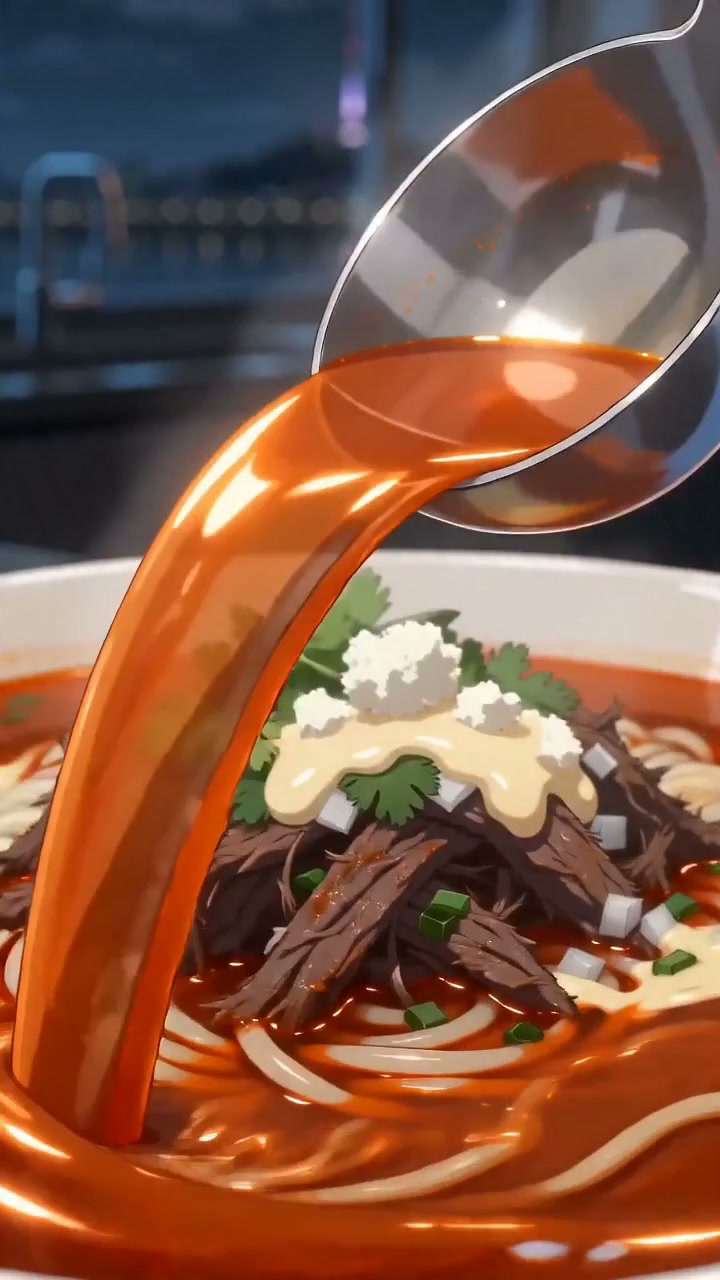
- Bring the broth back to a hard rolling boil, then ladle it over the beef in one steady pour, straight onto the slices. They bloom from deep red to soft grey-pink in a few seconds. That pour is the only cooking the beef gets, so the broth has to be genuinely boiling when it hits the bowl.
- Finish with chili oil dripped over the surface and set the egg half against the side of the bowl. Bring the sprouts, herbs and lime out on a plate alongside with the spring rolls, and let everyone tear and add their own.
midnight tip. two things decide whether this tastes like pho or like beef noodle soup. first, the onion goes on the bare flame, not into a pan with oil - you want dry scorched skin and smoke, and the black bits go into the pot with it. second, the broth never boils again after you skim it, because a rolling boil is what turns it cloudy and flat. and get the broth all the way back to a hard boil before you pour: warm broth leaves the beef raw and slack, while boiling broth sets it to that soft grey-pink in seconds.
Questions
no gas burner - how do i char the onion?
halve the onion and press the cut faces into a dry cast-iron pan over high heat until they go black, 4 to 5 minutes, which is the closest match. a broiler on its highest setting also works, about 8 minutes with the rack close, turning once. what you cannot do is skip it or soften the onion in oil instead - that gives you sweetness without the smoke, and the broth ends up tasting flat in a way that more fish sauce will not fix.
why did my broth turn out cloudy?
almost always one of three things. the bones were not blanched and rinsed first, so the scum stayed in. the pot was left at a rolling boil, which emulsifies fat into the liquid. or the foam was not skimmed in the first 20 minutes, when nearly all of it rises. fix all three and the broth comes out clear amber even without straining twice.
is it safe to leave the beef raw in the bowl?
this is how pho tai is served, and the cooking happens in the bowl. use a whole-muscle cut like eye of round or sirloin rather than anything pre-ground or pre-tenderized, keep it cold until the moment it goes in, slice it about 2 mm, and pour the broth at a full rolling boil so the slices lose their red immediately. if you would rather not, dunk the slices in the boiling broth in the pot for 10 seconds and lift them into the bowl already grey.
can i make the broth ahead?
the broth is better on day two, and that is the honest way to make this on a weeknight. it keeps 4 days in the fridge and 3 months frozen, and the fat cap that sets on top actually seals it. the noodles and the beef get no head start though - soak the noodles and slice the beef right before you eat, or the noodles go gluey and the beef dries at the edges.
(this one was PHO) — it finds your DMs.
More midnight meals












the prompt format behind them →
@jens_midnightkitchen